Wick Flex: How Scent Became Pop's Most Personal Piece of Merch
There's a specific kind of recognition that happens before anyone says a word. You walk into a friend's apartment, catch a hit of something green and a little smoky, and you already know which era of which artist they've been living inside for the past six months. No framed poster. No tour tee draped over a chair. The candle did all the talking.
Scent has quietly become the most personal thing at the merch table. Not the loudest — that's still the hoodie — and not the most expensive. But in 2026, a limited-run candle named after a track that never got a single is doing something a tote bag can't: it makes a fan's living room smell like the record they can't stop playing.
From Tour Tee to Tour Tealight
The shift didn't happen overnight. For years, artist merch meant cotton. Then it meant vinyl variants, then cassette reissues, then the inevitable $90 zip-up. Somewhere in that arms race, a smaller batch of artists started asking a different question: what if the thing fans brought home wasn't something they wore, but something they burned?
The early versions were novelty — a candle with a logo slapped on the lid, sold next to the lighters. What's happening now is more deliberate. Artists are commissioning fragrances the way they commission album art, working with perfumers and small-batch studios to build something that actually smells like the project. Cedar and fig for the moody record. Salt and citrus for the summer one. A green, almost garden-like note for the album that sounded like a greenhouse.
That's where AYABAMBI's whole beat comes in. Pop culture blooms loud, and lately it also smells like it.
Deep Cuts, Poured Into Wax
The smartest version of this trend skips the hit entirely. A candle called "Track 7" or named after a b-side is a flex aimed squarely at the people who already know. It rewards the fan who read the liner notes, who knows which song was written at 3 a.m. in a rented house, who can explain why that particular track matters more than the one with the video.
That's the quiet genius of the format. A t-shirt with a deep cut on it is a public statement. A candle with a deep cut on it is a private one — you have to be in the room to get it. Fans trade notes the way they used to trade burned CDs: which scent is closest to the actual studio, which one smells like a candle and which one smells like a memory.
The Shelf Is the New Shrine
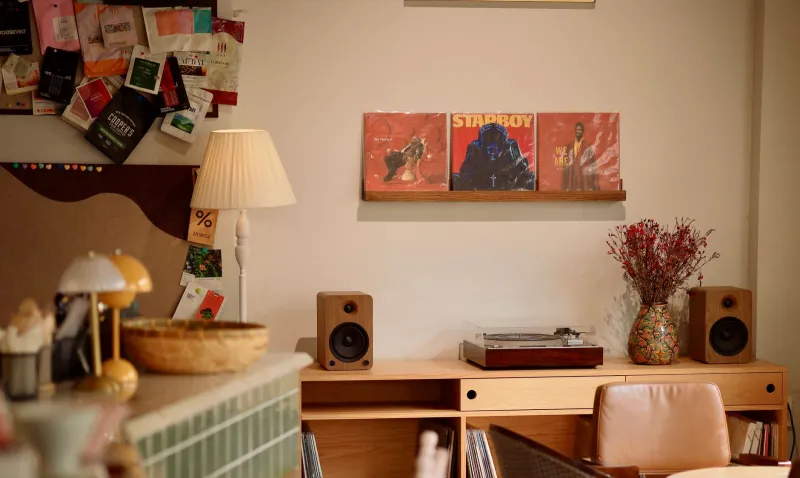
Display culture did the rest. Scroll through any fan account and you'll find the shelf: vinyl propped up, a tour book, maybe a dried bouquet from a show, and now a candle sitting front and center, usually unlit, wick trimmed, label facing out.
There's a logic to it. Candles photograph well. They stack. They match the aesthetic of a bedroom-turned-shrine without demanding wall space for a poster a roommate might veto. And unlike a hoodie you wear into the ground, a candle in good condition holds its value in the resale market — a fact that has not escaped anyone who missed the first drop.
Fans talk about these things the way collectors talk about pressings. Sealed versus burned. First run versus restock. Whether the label changed between batches. It's merch, but it's also grading.
Why Scent Outperforms a Tote Bag
Scent goes straight to the part of the brain that handles memory, which means it doesn't just remind you of the album — it can re-create the feeling of the first time you heard it. That's a hard thing to buy, and it's why a candle can outsell a hat that costs the same amount.
It's also a lower-commitment purchase than it looks. Nobody has to decide if they're a candle person. They light it, it smells good, it gets used up. Compare that to a $150 jacket you wear twice.
And there's the gift angle. Candles are the rare piece of fandom merch you can hand to someone who has never streamed the album and still have them say thank you. Artists have noticed. Holiday drops have become a thing.
Small Batches, Big Sellouts
Here's the part that frustrates people. Candles are heavy, fragile, and expensive to ship, which means most of these runs are small — often a few thousand units, sometimes fewer — and they sell out fast. The result is a familiar cycle: announcement, sellout within hours, a wave of posts from people who missed it, and a resale listing at triple the price.
Some artists have responded by restocking quietly. Others lean into the scarcity because, well, it works. But the fans who get burned (figuratively) are starting to push back, asking for made-to-order runs or at least a heads-up before the 10 a.m. drop.
What It Smells Like From Here
Expect more collaborations with independent fragrance studios, more deep-cut naming, and more scents built around a specific tour rather than a whole discography. A candle that smells like the arena. A candle that smells like the bus. A candle that smells like the green room at 4 p.m.
The merch table has always been about taking a piece of the night home. Scent just happens to be the version of that idea you can't photograph properly, can't wear out, and can't quite explain to anyone who wasn't there. Light it, and the room changes. That's a lot to ask of wax — and lately, it keeps delivering.