The Quiet Flex: Inside Pop's No-Phone Listening Party Boom
Photo: Jordan Colburn, CC BY-SA 2.0, via Wikimedia Commons
The line outside the Brooklyn cinema wraps around the block, but nobody's scrolling. That's the first clue. At the door, a attendant in a branded hoodie asks for your phone, drops it into a locked pouch, and hands you a lanyard. Inside, the concession stand sells custom cocktails named after album tracks. The screen doesn't show a movie. It shows a countdown. Welcome to the listening party, pop's new favorite ritual.
From Drive-Ins to Dark Rooms
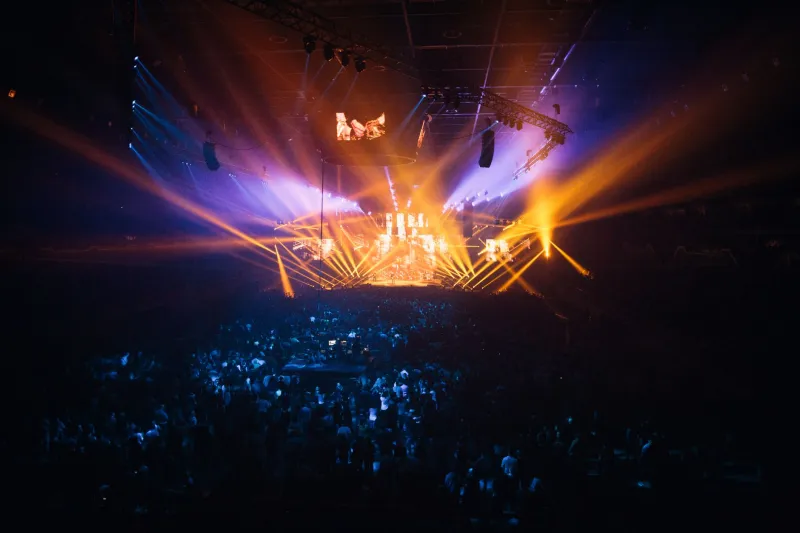
We've been here before, sort of. In 2020, artists turned to drive-in theaters and empty arenas to share new music when touring vanished. Those events were scrappy, often weird, and deeply pandemic-coded. By 2023, the format had evolved: silent-disco headphones, rented indie cinemas, and a growing obsession with 'focused listening.' But 2026 is the year the listening party went from promotional sideshow to headline event. This spring alone, three major US artists—a genre-blurring pop star from Atlanta, a Nashville indie darling, and a Los Angeles producer-turned-vocalist—hosted multi-city listening runs that sold out in minutes. No opening act. No encore. Just the record, once, in a room full of strangers.
The Phone Check Is the New Velvet Rope
The no-phone rule isn't just a courtesy; it's the whole vibe. Most parties use locked pouches (Yondr is the go-to), and the moment your device disappears, something shifts. People actually talk to each other. They make eye contact. They cheer at a bass drop like it's a live show. 'I forgot how loud silence could be,' a 24-year-old fan named Maya told me outside a Manhattan event. She'd just heard an album she'd been waiting two years for, and she hadn't seen a single notification. 'I remembered every transition. I cried at track six. I didn't have to perform liking it for anyone.'
That's the trade: you give up the impulse to document, and you get the memory instead. In a culture that treats release day like a content sprint—first reaction tweets, TikTok snippets, playlist screenshots—the listening party asks you to sit still. It's a luxury now.
Why It Works in 2026
Scroll fatigue is real. We've spent a decade optimizing for shareability, and the result is a lot of noise and very little presence. Listening parties offer a corrective: a designated hour where the only task is to listen. Artists are leaning in because it's cheaper than a tour and more emotional than a livestream. Labels love it because it turns an album drop into an IRL moment without the overhead of a full production. And fans love it because it feels exclusive without being expensive—tickets usually run $25 to $60, often bundled with a vinyl preorder or a signed poster.
There's also the simple fact that albums are back. Not just as streams, but as collectible objects and narrative arcs. The listening party is the natural ceremony for that. It's the christening.
What Actually Happens Inside
Here's the thing: it's not a concert. People sit. Some close their eyes. Some dance in their seats. At a recent Austin event, the artist appeared after the final track for a 20-minute Q&A, then left without playing an encore. 'It was like a book club for a record,' one attendee said. 'We were all there for the same story.'
And there's something deeply communal about a shared gasp. When a surprise feature drops in the second verse, the room reacts as one. When a ballad strips everything back, you can hear the breathing. It's intimate in a way that a stadium never is.
The Business of Intimacy
Let's be clear: this is still marketing. Listening parties generate after-the-fact social posts—'I heard it first' flexes—without the risk of leaks from a full stream. They sell merch, boost pre-saves, and give superfans a story to tell. But the transaction feels fairer than most. You pay for an experience, not a product. And the artist gets to present their work the way they intended: front to back, no skips.
Some are already calling it the new tour. That's an overstatement—but not by much. As vinyl sales climb and attention fragments, the listening party is becoming a standard stop on the release calendar. Will it saturate? Probably. But for now, it's pop's most effective tool for making an album feel like an event without pretending it's a stadium show.
The Quietest Flex
In an era where everyone is broadcasting, the listening party is a flex of a different kind: restraint. It says the music is enough. It says your attention is worth protecting. And it says that sometimes, the most intimate spectacle is a room full of people doing absolutely nothing but hearing something new, together.
So yes, bring your phone. Just be ready to hand it over at the door.