Petal Pushers: The Secret Army of Florists Dressing Pop's Biggest Eras
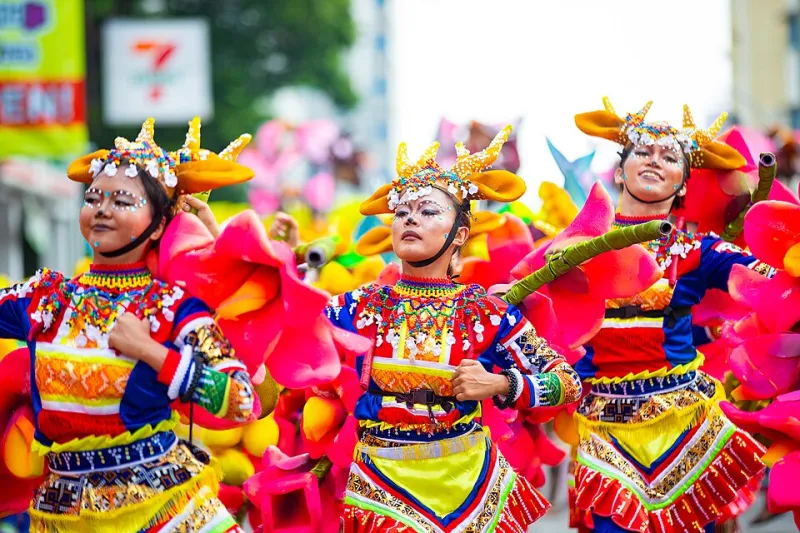
Photo: Rolando.entero, CC BY 4.0, via Wikimedia Commons
Somewhere in a Brooklyn warehouse right now, a florist is taping orchid stems to a lighting rig because a pop star's team decided the encore needs to feel like a greenhouse collapsing in slow motion. Nobody puts this in the tour documentary. Everybody remembers it anyway.
Flowers are everywhere in pop right now — not as a soft little accent, but as a whole visual thesis. And if you've ever wondered who's actually building these blooming worlds, the answer is a small, hyper-skilled crew of florists and art directors working days in advance, wiring petals that will only be seen for ninety seconds.
Why Pop Can't Stop Reaching for Petals
The shorthand is almost too easy: flowers mean softness, rebirth, romance, decay. But that's exactly why artists keep grabbing them. A rose can read as classic on one album and menacing on the next. Cherry blossoms signal impermanence. A sunflower is optimism with a fever. There's no other prop in the visual toolbox that bends that far in either direction.
There's also the timeline factor. Pop moves in eras now — every album cycle is a rebrand, a costume change, a new color palette for the fandom to decode. A floral motif gives a whole rollout a signature without saying a word. Fans screenshot it, embroider it on jackets, and six months later the flower is the album.
The People Behind the Bouquets
Talk to the florists doing this work and a pattern emerges: the job is less about arranging and more about engineering. One LA-based floral designer who's built sets for arena tours described it to us like this: "A grocery-store bouquet and a stage bouquet are two different species. Everything has to survive heat, wind machines, and a dancer kicking it across the stage. I've glued individual petals back on mid-show from the wings."
The logistics are wilder than the aesthetic. Installations for stadium shows get pre-built in sections, shipped in refrigerated trucks, and assembled overnight. Some designers freeze flowers at peak bloom weeks out. Others have switched to high-end silk for anything above ground level — because a wilted rose reads as poetry, but a wilted forty-foot installation reads as a fire hazard.
And then there's the art directors, the translators. They take an artist's mood board — usually three vague references and one emoji — and decide whether that becomes a field of dried lavender or a wall of genetically perfect white orchids. The best of them think like set designers and botanists at once.
Softness as a Power Move
Here's the subversive part: florals used to be coded as gentle, feminine, decorative. Pop has spent the last few years weaponizing that. An artist wrapped in blooms on a cover isn't saying delicate anymore — she's saying look closer. The flower becomes a dare. Is this pretty or is it a trap?
That tension is the whole appeal. A thorn is still a thorn no matter how good the lighting is. Younger artists especially have figured out that the most interesting image isn't tough or tender — it's both at once, tangled in the same stem.
What to Watch Next
Expect the trend to keep mutating. We're already seeing dried and pressed florals replace fresh ones in editorial shoots (better for shipping, better for the planet, and the texture photographs like an old love letter). Expect more artists collaborating directly with floral artists the way they do with visual painters — credited, named, part of the era's mythology.
Because that's the real story. The flower was never the point. The point is that pop has gotten so visual, so era-obsessed, that even the set dressing has a fanbase. The next time a stage erupts in blooms and your feed melts down for a night, spare a thought for the person in the wings with a glue gun and a watering can.
They made that moment. You just got to live in it.