Nobody's Watching (That's the Point): Inside Pop's New Backstage, the Group Chat

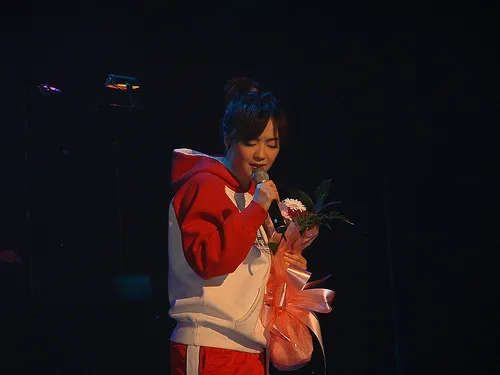
Photo: Altitonantis, CC0, via Wikimedia Commons
There's a moment that happens at every listening party in New York, LA, and Atlanta: someone drops a lyric, the room goes quiet, and then forty phones light up at once. Not to post. Not to tweet. To send the exact same message to a group chat with a name like "no pens allowed 🚫🖊️" or "the van breakdown gc."
If you're outside the chat, you'll never know it happened. And that's precisely the design.
The Feed Got Loud, So Everyone Left
For about a decade, stan culture lived in public. Hashtags, quote tweets, view counts — fandom was a spectator sport performed for an audience of strangers. But somewhere between the third artist scandal of the month and the rise of rage-bait accounts farming engagement off pop girls, the public feed stopped feeling like a clubhouse and started feeling like a courtroom.
So the fans did what fans always do. They moved.
The migration didn't go to another app, though. It went sideways — into group texts, private Discords, Finstas with 12 followers, and Slack servers for people who met once at a merch line in 2022 and never stopped talking. Music discovery, the thing everyone assumed algorithms had cornered, now routinely starts in these rooms. A 90-second voice memo of an unreleased snippet, passed chat to chat like contraband, does more for a cult artist than a playlist placement ever could.
"My algorithm thinks it knows me," says Jules, 23, a fan in Chicago who runs a 60-person Discord for a mid-tier R&B singer. "But my group chat knew about her before her label did."
The Venue You Can't Buy a Ticket To
Here's what makes the group chat different from every other fan space: it has a velvet rope.
Public platforms reward scale. Private ones reward vibe check. Getting into the right chat isn't about clout — it's about trust. You get vouched for. You prove you're not going to screenshot. You learn the inside jokes, the nicknames for the B-sides, the running bit about the tour bus driver. It's the modern version of standing outside a venue in the rain, except the venue fits forty people and the password changes weekly.
And artist managers have noticed. Three of them we spoke to — all of whom asked to stay vague on the record, because of course they did — described group chats as the most honest focus group in the industry. No clout-chasing, no engagement bait. Just raw, unfiltered reactions within minutes of a single dropping.
"We can tell within an hour whether something's working, and it's never from the public numbers," one manager told us. "The public numbers lie. The group chat does not. The group chat has never once lied to us."
Some managers go further, quietly seeding leaks and snippets into fan Discords — the digital equivalent of slipping a demo tape to the cool kids at the back of the cafeteria.
Finstas, Burners, and the Art of Being Unsearchable
The group chat has a sibling: the Finsta. The fake Instagram — or at least the less real Instagram — has become where the real posting happens. Twenty followers, all friends. Stories that would be cringe on main. Unhinged 2 a.m. reactions to an album rollout that nobody outside the circle will ever witness.
There's a psychological shift here that's bigger than aesthetics. Public posting demands a performance. Private posting permits a person. Fans say they're more honest about what they love when nobody's grading them for it — which is why a Finsta story about a deep cut can be more emotionally revealing than a thousand like-farmed posts on a stan account with 80K followers.
The result is a fandom culture that's simultaneously more intense and more invisible. Loyalty deepens in small rooms. Disputes get settled in DMs instead of pile-ons. And the artists at the center of it all become less like brands and more like friends you argue about at dinner.
What Happens When the Backstage Is the Show
The irony is rich: an industry built on reach is now taking its cues from spaces with none. Marketing teams are studying Discord emoji patterns. Labels are hiring "community leads" whose entire job is being a trusted presence in rooms they don't control. The biggest stan moves — the discovery, the defense, the devotion — happen where no one else can see them, and everyone from A&Rs to brand managers is trying to peek through the keyhole.
But here's the thing about the group chat: it can't be bought, and that's the whole product. The moment it becomes a channel, it stops being a chat.
So the next time an artist seems to come out of nowhere — a snippet, a sound, a whole aesthetic suddenly everywhere at once — don't look for the viral moment. It didn't start there. It started weeks earlier, in a room with no name, forty phones lighting up at once, and nobody watching.
That's not the backstage anymore. That's the show.